The Mechanics of the Loom
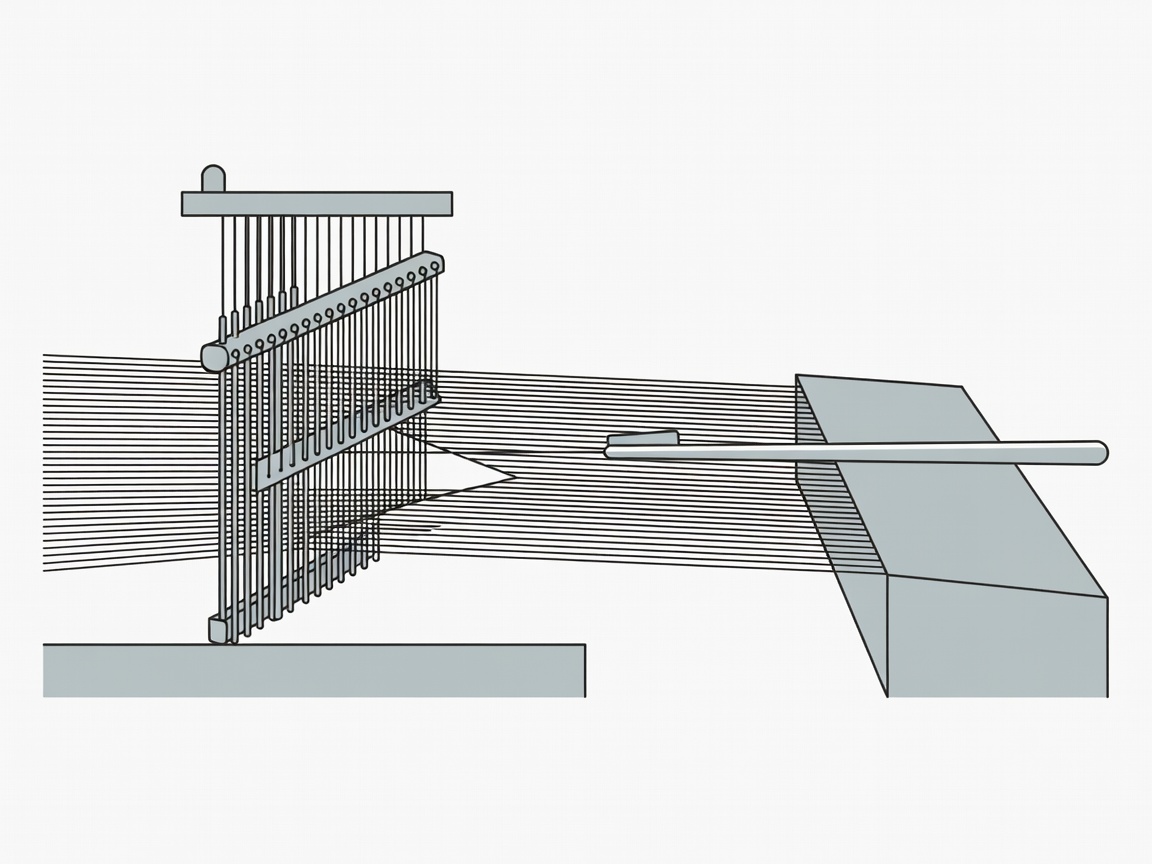
Weaving is defined by the right-angle intersection of two distinct sets of yarns: the warp (longitudinal) and the weft or filling (latitudinal). The fundamental mechanics of the loom, regardless of its technological age, rely on three primary motions.
Shedding
The separation of warp yarns into an upper and lower sheet, creating a tunnel (the shed) through which the weft can pass. This is controlled by heddles mounted on harnesses.
Picking
The actual insertion of the weft yarn through the open shed. Historically performed by a wooden shuttle, modern methods use alternative, faster carriers.
Beating Up
A comb-like device called the reed pushes the newly inserted weft thread firmly into the fell of the cloth (the already woven fabric edge) to ensure structural density.
Modern Weft Insertion Technology
The traditional shuttle loom, constrained by the mass of the wooden shuttle, operates at relatively low speeds. The industrial revolution in weaving substituted the shuttle with shuttleless technologies to drastically increase picks per minute (PPM).
Rapier Looms: Utilize flexible or rigid rods with gripper heads to carry the weft across the shed. Highly versatile for complex yarns.
Air-Jet Looms: Propel the weft yarn across the shed using highly pressurized directional air nozzles. Currently the fastest method for standard cotton production.
Knitting Structures
In contrast to weaving, knitting involves forming continuous loops of yarn. Weft knitting (like hand knitting) forms loops horizontally across the fabric, offering high stretch and recovery. Warp knitting creates loops vertically, resulting in highly stable, run-resistant fabrics widely used in technical textiles and activewear.